Talking Turkey About Hair Transplant

A man losing his hair will travel far for hope. Many now look toward Turkey, drawn by low prices and high graft numbers. The deal looks simple. More grafts for less money. But hair does not follow bargain rules. The scalp has limits and remembers every cut. When the work is careless, the damage stays for life.

Hair replacement surgery includes various surgeries such as hair transplantation, scalp reduction, and flap surgery, all aimed at restoring hair to bald areas.

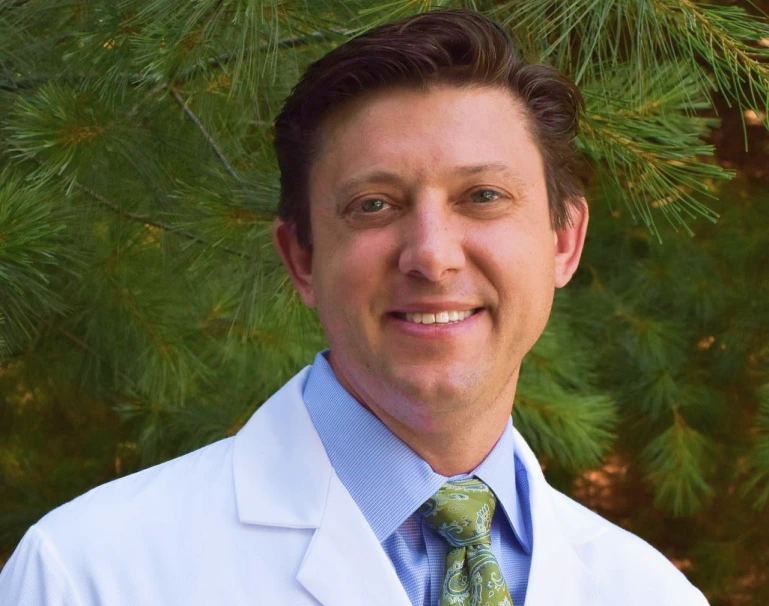
In our clinic, NE Hair, the work begins with small, precise tools. As our Ryan Welter MD PhD says, “We use micro FUE punches with tiny diameters that give really nice grafts and let the donor heal well.“ These punches range from 0.65 to 0.75 millimeters, made for accuracy, not speed. After extraction, NE Hair treats the donor area with serums, peptides, PRP, and exosomes so it recovers strong and clean. The point is not to empty the donor. The point is to preserve it. The success of a hair transplant procedure depends on several factors, including the quality of donor grafts, the patient’s good health, and favorable characteristics such as thicker hair and low contrast between hair and scalp.

Implanting grafts is where the fork in the road begins. Years ago, Dr. Welter used “implanters” for everything. “Implanters are a one step incision and placement, and they work very well in the right setting.”
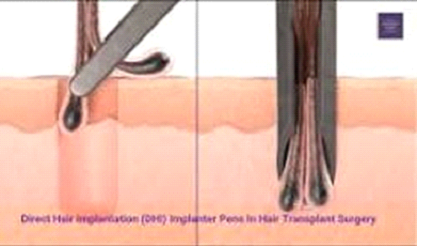
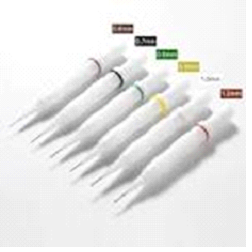
A graft is placed inside a needle-like tool. Dr. Welter punctures the skin and plants the hair in a single motion. This method is common in Europe and dominates Turkey. It is fast. It trains quick. It needs a small crew. As he notes, “In Turkey, it is all technicians doing the implanting, not a doctor.” That fact alone tells the story.

Speed, however, has a cost. Implanters often leave grafts sitting a little high. As he explains, “The epithelium tends to float on the skin a little bit.” Over time this can create a surface like a small cobblestoned field instead of a smooth scalp. If a man ever shaves his head, the texture stands out. He may feel the bumps under his fingertips, like raised pavers. Not painful, but not natural either.

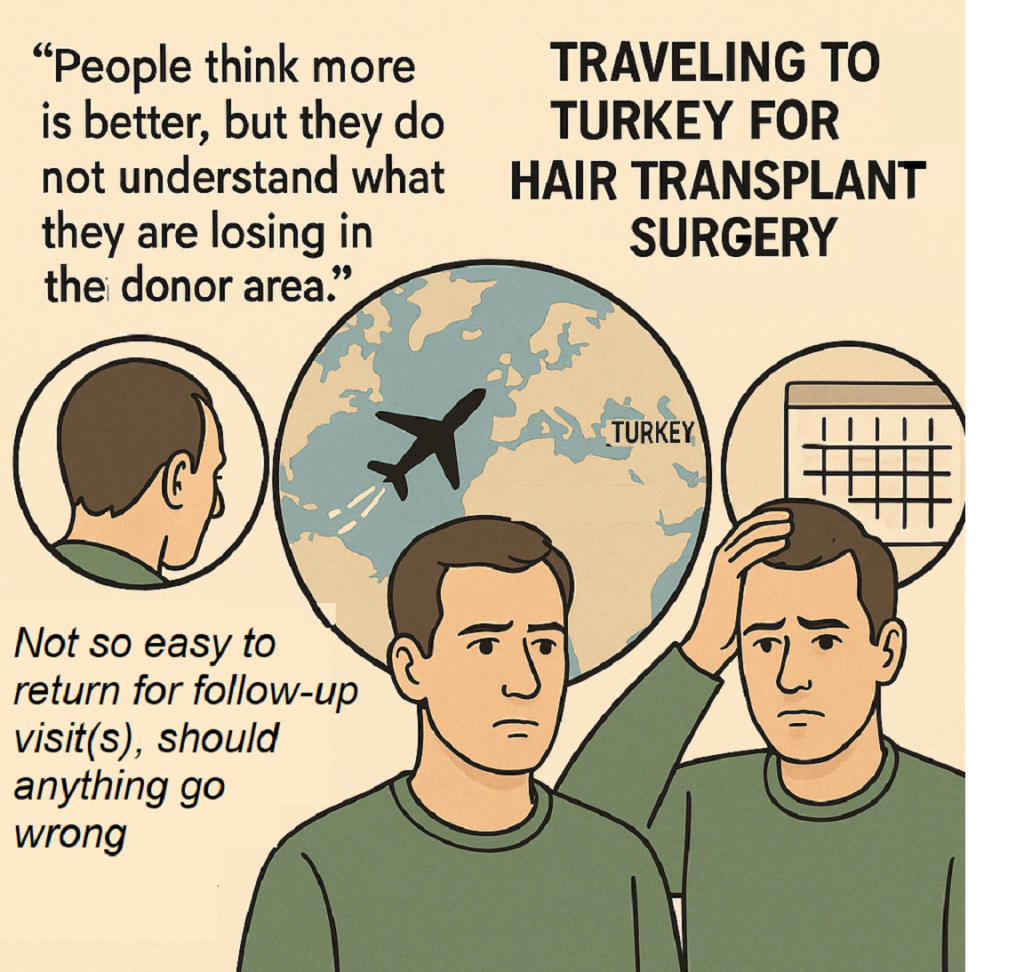
This is why, for scalp work, we prefer custom diamond blades. “Diamond blades give better density because they let the grafts sit super tight.” The grafts lie flush with the skin. They settle into the natural grain of the scalp. When healed, the result is uniform, smooth, and balanced. Implanters do shine in special areas. Dr. Welter points out, “Implanters are great for eyebrows because the grafts tend to float in that tissue.” Eyebrows and beards have softer, looser skin, where a one step incision and placement keeps the graft steady. We use implanters there for a reason. It is the right tool for that job. Good work depends on choosing the right method, not the fastest. Hair transplantation techniques can also be used to restore chest hair and other body hair, providing natural results in areas affected by scarring or baldness. Turkey’s FUE hair-transplant venues often chooses speed. Clinics advertise three thousand, four thousand, even five thousand grafts as though grafts were tokens in a machine. Many men do not need that many. Taking more than necessary harms the donor area. “If you do not need three thousand grafts, you are doing harm by taking them.“ Each extracted graft leaves a tiny scar. Hundreds are fine. Thousands in excess create a thin, patchy donor region. It looks moth-eaten. We have seen men lift their hair in the back and whisper, embarrassed, “What happened?” Their heads tell the answer. Patients see the numbers and assume value. “More for less.” But our Dr. Welter explains why that logic fails. “People think more is better, but they do not understand what they are losing in the donor area.“ There is no refund for overharvesting. Once the follicles are gone, the scalp cannot grow them back. It is a bank account drained without reason. Not having enough hair in the donor area can limit future surgeries, and realistic expectations are important for each individual patient. We see many men returning from abroad with donor damage. “We are seeing a lot of bad donor outcomes because clinics take out five thousand grafts when they are not needed.” The top may look acceptable, at least at first. But the back tells a harsher story. Empty patches. Scars too wide. Thin rows. Hair growing in broken patterns. Some can be repaired. Some cannot. The market is waking up. “The market fixes itself because the outcomes dictate the truth.” When a man shaves his donor area and sees the scars, he spreads the word. More men now ask questions before they travel overseas. Still, many are tempted by the lower cost and high graft counts. The same pattern is seen in cosmetic nose surgery, jaw surgery, and other procedures done cheaply abroad. As Dr. Welter says, “Hair we can often fix, but a ruined nose or jaw is a lifetime of repair.” A responsible transplant uses only what the scalp can afford to give. Maybe one thousand grafts. Maybe two thousand. Rarely more. The goal is not to harvest everything. The goal is long-term strength, long-term density, long-term options. A man may lose more hair with age. He may want a second procedure years later. A well preserved donor area keeps that door open. A good transplant should not announce itself. It should grow with the man. It should hold up in the wind and in the shower. It should look natural short, long, or any length between. This only happens when the work respects the limits of the scalp. Turkey can tempt with low prices and quick fixes.

But hair is not something to bargain for. It is part of a man’s identity. It deserves careful hands, trained judgment, and the patience to do it right. That is our standard, and we keep it.

Introduction to Hair Restoration

Hair restoration, often called hair transplant surgery, is a cosmetic surgery designed to bring hair back to areas of the scalp where it’s thinning or gone. The goal is simple: restore a natural appearance by moving healthy hair follicles from one part of the scalp to another. This process can help men and women facing hair loss, whether it’s from male pattern baldness, female pattern hair loss, or just general thinning hair. There are a few main procedures in hair restoration surgery. Follicular unit extraction (FUE) and follicular unit transplantation (FUT) are the most common. Both methods involve transplanting hair follicles to areas that need more coverage, but they differ in how the follicles are harvested. No matter the method, the aim is always the same—achieve a result that looks and feels natural, blending seamlessly with your existing hair. Hair restoration is more than just a procedure; it’s a way to reclaim confidence and restore what time or genetics may have taken away.

Understanding Hair Loss

Hair loss is something millions of people deal with, and it can show up in many ways—thinning hair, bald patches, or a receding hairline. The causes are often a mix of genetics and hormones, but stress, illness, and other factors can play a role too. There are different types of hair loss, like androgenetic alopecia (the classic male or female pattern baldness), alopecia areata (patchy hair loss), and telogen effluvium (shedding after stress or illness). Knowing what’s behind your hair loss is the first step toward finding the right solution. For many, hair restoration surgery offers hope, especially if there’s enough healthy donor hair to work with. Whether you’re dealing with thinning hair or more noticeable bald patches, modern hair restoration techniques can help restore not just your hair, but your sense of self.

Follicular Unit Extraction

Follicular unit extraction, or FUE, is a modern hair restoration procedure that’s changed the way we approach hair transplants. In FUE, individual hair follicles are carefully removed from the donor site—usually the back of the head—using tiny, round punches. These follicles are then transplanted to the areas where new hair is needed.

What sets FUE apart is its minimally invasive nature. There’s no need for a long incision or stitches, just small, precise extractions that leave behind tiny dots instead of a noticeable scar. The result? A natural appearance, quicker recovery, and less discomfort. FUE is a popular choice for those who want new hair without the telltale signs of surgery, and it’s especially suited for patients who prefer to keep their hair short.

Follicular Unit Transplantation

Follicular unit transplantation (FUT) is another trusted method in the world of hair restoration. In this procedure, a thin strip of skin is removed from the donor site, usually at the back of the scalp. This strip is then carefully dissected into individual follicular units—small groups of hair follicles that naturally grow together. These units are then transplanted to the areas where hair is needed. FUT has been a mainstay in hair restoration for decades, known for its ability to yield a large number of grafts in a single session. While it does leave a linear scar at the donor site, this is often hidden by surrounding hair. For many patients, especially those needing significant coverage, FUT offers a reliable way to achieve a natural appearance and lasting results.

Harvesting Methods

When it comes to hair restoration, the way hair follicles are harvested makes all the difference. There are two major methods: strip surgery (FUT) and follicular unit extraction (FUE). In strip surgery, the surgeon removes a narrow strip of skin from the donor site, then divides it into individual follicular units for transplantation. FUE, on the other hand, involves extracting individual hair follicles directly from the donor area using small punches. Each method has its strengths. Strip surgery can provide a high number of grafts in one go, while FUE offers minimal scarring and a quicker recovery. The choice depends on the patient’s needs, hair type, and long-term goals. No matter the method, the surgeon’s skill in harvesting and preparing the grafts is key to achieving a natural appearance and healthy hair growth. The right approach ensures that every graft counts, setting the stage for a successful hair restoration journey.
Ready to Live
with New Hair ?
What Makes Our Hair Restoration Surgery Different From Others? Banner
February 19, 2026

Name