At Regeneris Hair, scalp micropigmentation offers a non-surgical way to create the look of a fuller head of hair, a crisp hairline, or a confident close-shaved style. Led by Dr. Ryan Welter, MD, PhD, our team designs every treatment around your features so the result looks like you, only refreshed. If thinning hair has been holding you back, this could be your next step forward.
At Regeneris Hair, scalp micropigmentation offers a non-surgical way to create the look of a fuller head of hair, a crisp hairline, or a confident close-shaved style. Led by Dr. Ryan Welter, MD, PhD, our team designs every treatment around your features so the result looks like you, only refreshed. If thinning hair has been holding you back, this could be your next step forward.
Table of Contents

Scalp micropigmentation (SMP) is a minimally invasive technique that creates the appearance of increased hair density. It is often described as a medical-grade tattoo, but it is far more specialized than anything offered at a neighborhood tattoo studio. SMP relies on purpose-built materials and very fine, medical-grade needles that deliver a precise amount of pigment roughly one-fourth to one-third of a millimeter beneath the epidermis.
Thousands of tiny dots are placed across the scalp to mimic the look of individual hair follicles. When the pattern, spacing, and pigment shade are matched carefully to your natural hair and skin, the effect reads as real hair at a normal viewing distance.
SMP can be used to:
Is scalp micropigmentation worth it? Watch the Regeneris Hair team explain what SMP can and cannot do.
Seeing real outcomes is one of the best ways to picture what SMP could do for you. Our before and after gallery shows the range of looks that hair restoration can achieve, from subtle density enhancements to complete hairline redesigns. Browse the gallery to explore results, then bring the photos that resonate with you to your consultation so we can talk through your own goals.
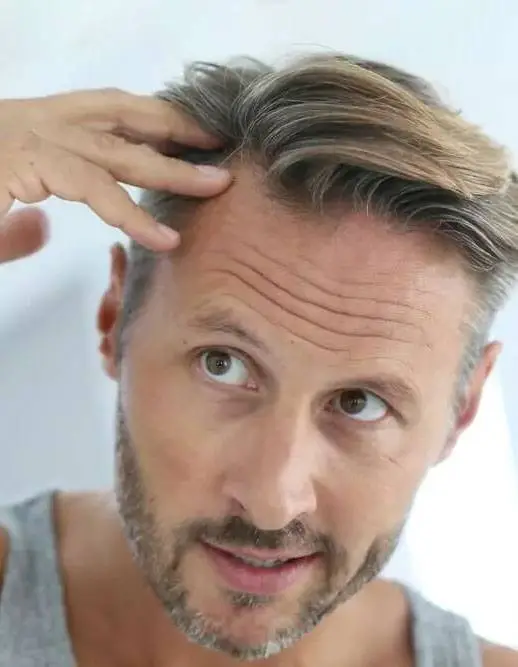
SMP works on the scalp surface rather than on the hair follicles themselves. It does not grow new hair. Instead, it changes how the scalp looks by reducing the contrast between skin and hair, which is what makes thinning so noticeable.
Hair loss tends to stand out because light skin shows through dark hair, or because the hairline lacks a soft, natural edge. Pigment dots placed between existing hairs fill in those gaps visually. Along the hairline, dots are layered in an irregular, feathered pattern so the transition looks gradual rather than drawn on.
Every SMP plan at Regeneris Hair begins with a conversation about you: how your hair loss has changed over time, what style you want to wear, and what a successful result looks like in your eyes.
During your consultation, we evaluate your scalp, the pattern of your hair loss, and your skin tone. Together we discuss hairline shape, the density you want, and whether SMP alone or SMP alongside another option from our menu is the better fit. Some patients pair SMP with Topical Hair Growth, Laser Hair Therapy, or Cell-Based Therapy to support existing hair while SMP adds visual fullness.
Our team will share specific instructions ahead of your appointment. In general, patients are asked to arrive with a clean scalp and to avoid sunburn on the treatment area so the skin is in good condition to hold pigment.

SMP can be a strong fit for many people experiencing visible hair loss. You may be a good candidate if you:
SMP may not be the right choice for everyone. Certain scalp conditions or skin concerns can affect how pigment heals, which is why we review your history carefully at your consultation.
Your first session is where your new look starts to take shape. The process begins by marking out your agreed hairline and selecting a pigment shade that complements your natural hair color and skin tone. You will have a chance to review the design before any pigment is placed.
Using fine, medical-grade needles, pigment is deposited in thousands of tiny impressions across the treatment area. Dot size, depth, and spacing are varied deliberately so the pattern resembles natural follicles rather than a uniform shade.
SMP is built in stages. The first session lays the foundation, and follow-up sessions add depth and refine the blend. This layered approach gives a more natural, dimensional appearance than trying to complete everything at once.

Recovery after SMP is typically straightforward, and many patients return to their normal routine soon after a session.
Some redness or mild tenderness on the scalp is common right after treatment and usually settles quickly. During the early healing window, patients are generally advised to keep the scalp dry, avoid heavy sweating, and skip swimming and direct sun exposure so the pigment can settle evenly.
Once healed, protecting your scalp from strong sun helps preserve the shade of your pigment over time. Our team provides personalized aftercare guidance and is available to answer questions throughout your healing.

Here is a general picture of how results tend to progress. Your experience may differ based on your skin and treatment plan.
The real value of SMP shows up in everyday life:
Scalp micropigmentation in Boston, MA typically ranges from $2,500 to $5,000, depending on the size of the area treated, the density you want, and how many sessions your plan requires. Pricing varies by provider, anatomy, and treatment plan, so your exact cost will be confirmed after your scalp is evaluated.
Financing options are available; our team can review them with you at your consultation. Reach out to request a personalized quote.
Physician-led hair restoration. Regeneris Hair is led by Dr. Ryan Welter, MD, PhD, a Hair Transplant Surgeon who earned his medical degree from the University of Oklahoma, a Doctorate in Biochemistry from Oklahoma State University, and completed his residency at Brown University. That background in both medicine and science shapes how our team approaches every plan.
A full spectrum of options under one roof. Because SMP is one part of a broad hair restoration practice, your plan is not limited to a single tool. Alongside SMP, we provide Follicular Unit Transplant, Micro Follicular Unit Excision, Neograft, the Artas Robotic System, Revision Hair Restoration Surgery, Cell-Based Therapy, Laser Hair Therapy, Topical Hair Growth, and Hair Growth Supplements.
Support from start to finish. Our team provides comprehensive post-procedure support, so you are never left guessing about healing, touch-ups, or next steps.
Two convenient offices: Westwood Office, 315 University Ave, Westwood, MA 02090, and North Attleborough Office, 465 S Washington St, North Attleborough, MA 02760. Both are open Monday through Friday, 9 a.m. to 5 p.m., and can be reached at (888) 781-1045.

Does scalp micropigmentation grow hair?
No. SMP does not stimulate hair growth. It creates the appearance of density by placing pigment in the scalp. Patients who also want to support their existing hair can discuss options such as Topical Hair Growth, Laser Hair Therapy, or Cell-Based Therapy.
Is SMP the same as a regular tattoo?
SMP is a form of medical tattooing, but it uses specialized pigment, finer needles, and a shallower depth than a traditional tattoo. The technique is designed specifically to replicate the look of hair follicles.
Does scalp micropigmentation look natural?
Yes, when it is done well. Each dot is matched in size, spacing and shade to your natural hair and skin tone, so it reads as real hair at a normal viewing distance. The hairline is placed with a soft, slightly irregular edge rather than a hard line.
Does the procedure hurt?
Most patients describe mild discomfort. Sensitivity varies from person to person and from one area of the scalp to another, and our team will talk through comfort measures with you.
How many sessions will I need?
Most SMP plans involve multiple sessions to build density in layers. Your exact number depends on the area being treated and the look you want.
Can SMP work with longer hair or diffuse thinning?
Yes. SMP is not only for shaved heads. Pigment placed between existing hairs reduces scalp show-through in diffuse thinning or a widening part, so the hair you have looks thicker.
Can SMP help hide transplant scars?
Yes, SMP is often used to soften the appearance of scalp scars, including linear scars from a Follicular Unit Transplant. Results depend on the scar’s texture and how it accepts pigment.
How long does scalp micropigmentation last?
Results last for years. Pigment may soften gradually over time, especially with sun exposure, and periodic touch-ups keep your hairline and density looking fresh.
Your hair loss story does not have to define how you feel when you look in the mirror. Scalp micropigmentation can help you reclaim a look that feels confident and complete. Call Regeneris Hair at (888) 781-1045 or book online to schedule your consultation and take the first step toward the hairline you have been missing.