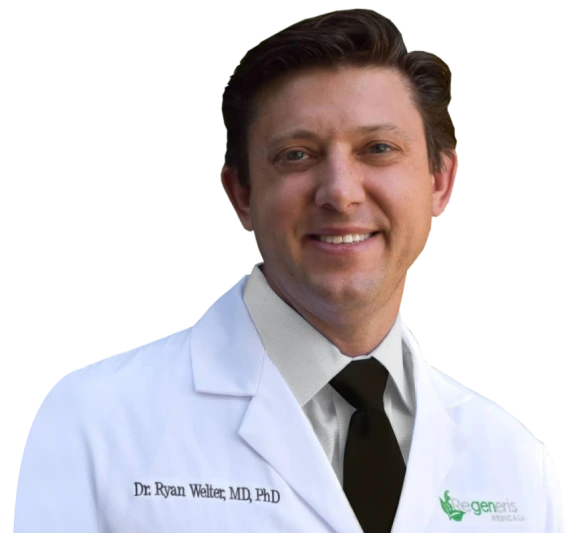
Our center in Boston offers comprehensive treatment for alopecia areata to help patients reclaim fuller hair. Led by Dr. Ryan Welter – a world-renowned hair restoration surgeon – our practice combines advanced therapies with personalized care to address this challenging autoimmune condition.
Our center in Boston offers comprehensive treatment for alopecia areata to help patients reclaim fuller hair. Led by Dr. Ryan Welter – a world-renowned hair restoration surgeon – our practice combines advanced therapies with personalized care to address this challenging autoimmune condition.
Table of Contents


Regeneris Hair offers a range of innovative and standard treatments for alopecia areata, with a focus on stimulating hair regrowth and restoring scalp health.
We often combine different treatment modalities for optimal results:
Regenerative treatments deliver growth factors to weakened or miniaturized follicles, encouraging them to re-enter the active growth phase. This supports new hair production and strengthens existing strands over time.

Most adults experiencing patchy, widespread, or severe hair loss related to alopecia areata are candidates. Ideal patients are committed to a personalized treatment plan and open to combining therapies for optimal results. A thorough consultation with Dr. Ryan Welter will determine the most appropriate approach based on your specific condition and medical history.
Certain autoimmune conditions, active scalp infections, pregnancy, or specific medications may require treatment modifications. Our team conducts a comprehensive evaluation to ensure the safest, most effective approach for your situation.
Most in-office treatments – including PRP injections – are minimally invasive and completed within one to two hours. Discomfort is minimal, and most patients return to normal activities the same day. Our team ensures a comfortable experience throughout the process.
Your journey begins with a comprehensive consultation with Dr. Ryan Welter. He will assess your hair loss pattern, review your medical history, perform a thorough scalp examination, and discuss your goals to design a customized treatment plan.

Follow-up instructions typically include:
Side effects are generally mild and temporary – redness, minor swelling, or tenderness at injection sites. Our team monitors your progress closely and adjusts treatment as needed.

Initial signs of regrowth often appear within 8–12 weeks, with more substantial results developing over 6–12 months depending on the severity of hair loss and the therapies used. Consistency with your treatment plan and follow-up appointments is key.
Alopecia areata can be cyclical, with periods of remission and recurrence. Maintenance sessions, topical treatments, and lifestyle recommendations help sustain results and reduce the likelihood of future episodes. Our team provides ongoing support to address any flare-ups.
The cost of alopecia areata treatment in Boston, typically ranges from $500 to $3,000 or more per session, depending on the specific therapy, the extent of hair loss, the complexity of the treatment plan, and the number of sessions required.
Hair restoration procedures, including those for alopecia areata, are typically not covered by insurance as they are often considered cosmetic. Our team offers convenient low-interest financing through our partners to make your care accessible and affordable.
Our center has a strong reputation for leadership in regenerative hair restoration. Dr. Ryan Welter developed the pioneering ALMI™ fat transfer technique for the scalp and has spent decades advancing cell-based therapies that few practices can offer. From PRP and SVF to ACell MicroMatrix, microFUE™, and laser hair therapy, our full spectrum of options means your treatment plan is never one-size-fits-all.
Every protocol is designed around your unique biology, delivering exceptional results for patients in Boston and beyond.
What causes alopecia areata?
Alopecia areata is an autoimmune condition where your immune system mistakenly attacks your hair follicles. The exact triggers are unknown but are believed to involve genetic and environmental factors.
Is alopecia areata permanent?
Does treatment hurt?
Most therapies involve minimal discomfort. PRP and injectable treatments use fine needles, and numbing agents are applied to keep you comfortable throughout the process.
How many sessions will I need?
Treatment plans vary. Some patients see improvement after a few sessions, while others benefit from a longer course of combined therapies. Dr. Welter will outline a clear plan during your consultation.
How long does it take to see results from treatment?
Can alopecia areata return after treatment?
Can alopecia areata treatments be combined with hair transplant surgery?
Ready to take the first step toward regrowth? Schedule a consultation with Dr. Ryan Welter today by calling or booking online.